Let’s say you’ve been playing fighting games casually for years now. Pressing random buttons and knowing one special move is how you get by playing with friends. One day, you randomly meet someone at a friend’s birthday party while you guys play smash, you notice your not winning at all. You really want to beat this person and you can’t. You ask that person how they’re beating you and they say “you don’t know your fundamentals.”
Fundamentals are concepts beyond the game mechanics. Fighting game theory is crucial to becoming good at fighting games and to understand fighting games at a competitive level. When I started off in Super Smash Bros. for the Wii U, I never knew what fundamentals were. I just went up to my opponents and tried to hit them. I though specials were special moves that gave you a better chance of hitting your opponent. Once I met Hakii, he taught me a lot and gave me a deeper insight of the game.
Hakii is the Number 1 player in Austin, Texas for Super Smash Bros. Ultimate. Hakii has been number 1 since the beginning of the game and shows no sign of slowing down. I met him while playing friendlies at one of our first tournaments. Since we met, he taught me things like neutral, spacing, advantage/disadvantage, and some other terms we’ll take into account in the blog post. I appreciate him so much for that.
Before you start reading this next section, finding your main is a very important thing! If you haven’t, you could go back to my “How to Find a Main” blog post to have some help finding one!
A player starts up their switch, inserts Super Smash Bros. Ultimate, selects their character and goes into their first match.
3..
2..
1..
GO!
Neutral
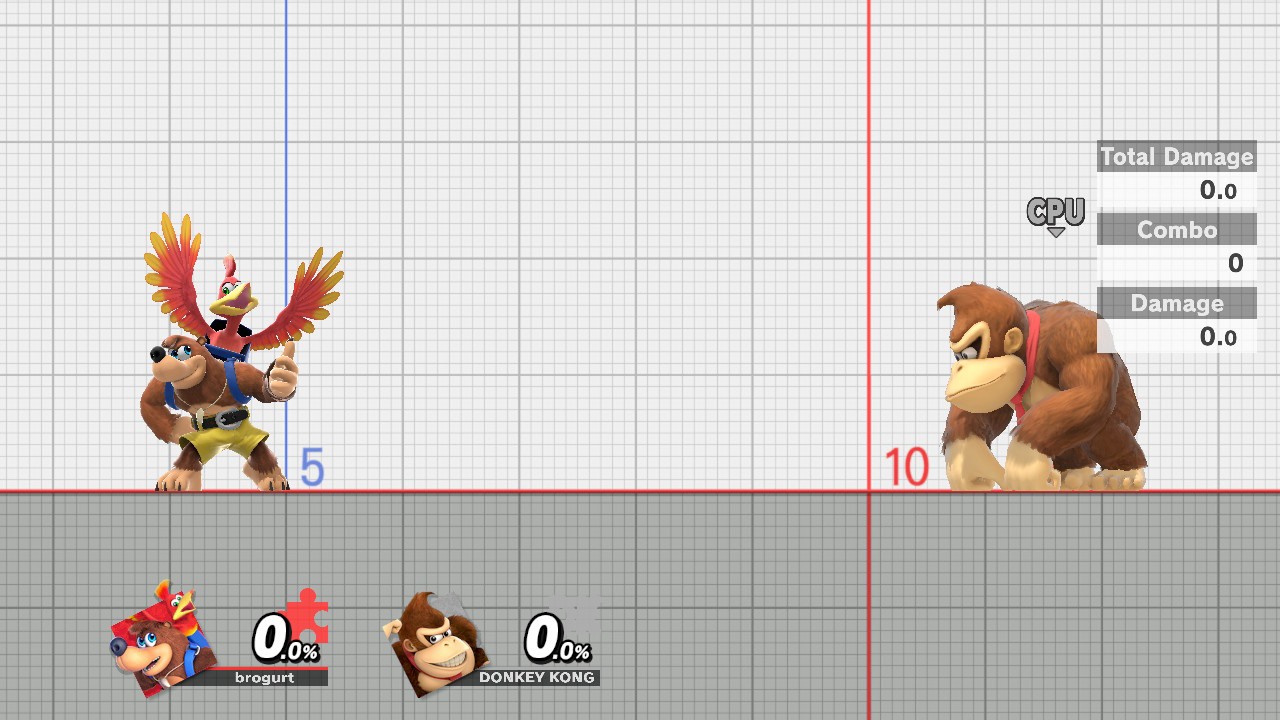
Neutral is a term used to describe the space between both players. Nobody is taking damage or attacking; there is just a lot of space on the battlefield. This space is important because the player wants to make sure they don’t get hit/take damage from their opponent or anything on the battlefield. When in neutral, the players want to make sure they can hit their opponent. So they can either “break” neutral by approaching them directly, bait their opponent to make a move, zone the opponent out with projectiles, or poke them with the proper move.
Spacing
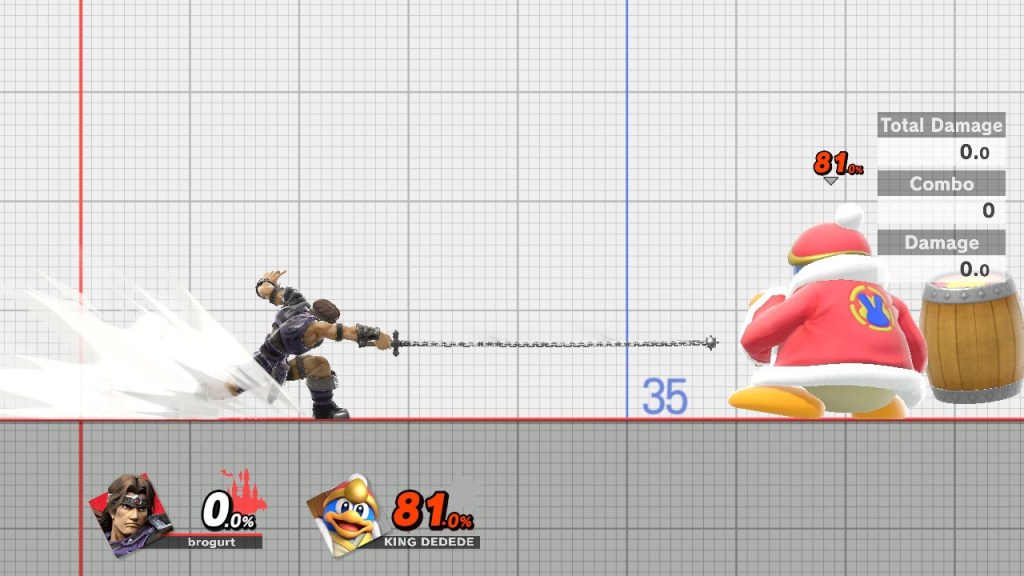
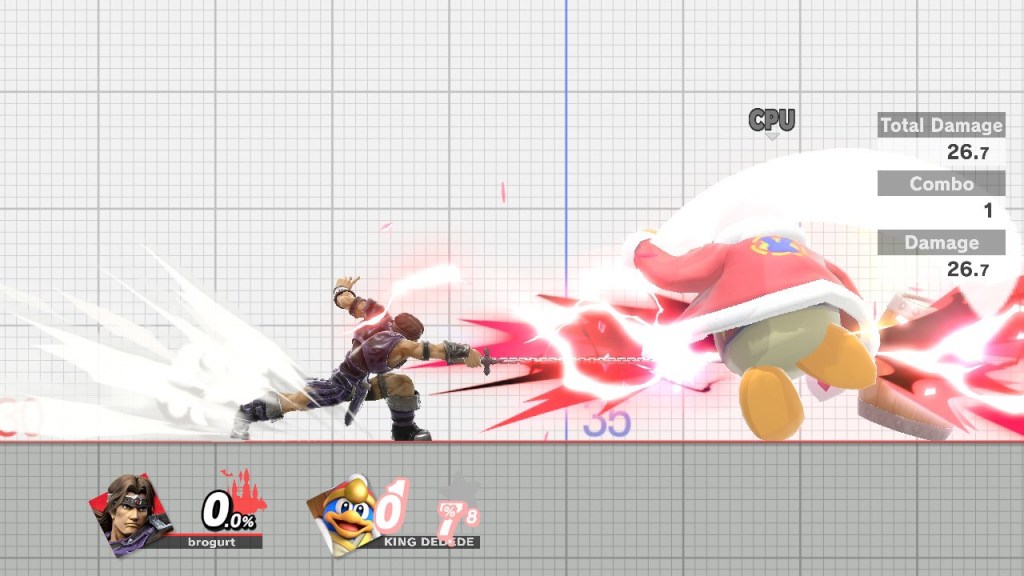
Keeping attacks spaced enough to use the max range on a moves hitbox to range out the opponent. Spacing also helps players keep their distance and make moves “safe” on shield. In the first photo, Simon Belmont is at max range with the whip but not hitting his opponent to show the range of the move. The second photo shows Simon Belmont hitting his opponent at max range with the same move.
Advantage/Disadvantage
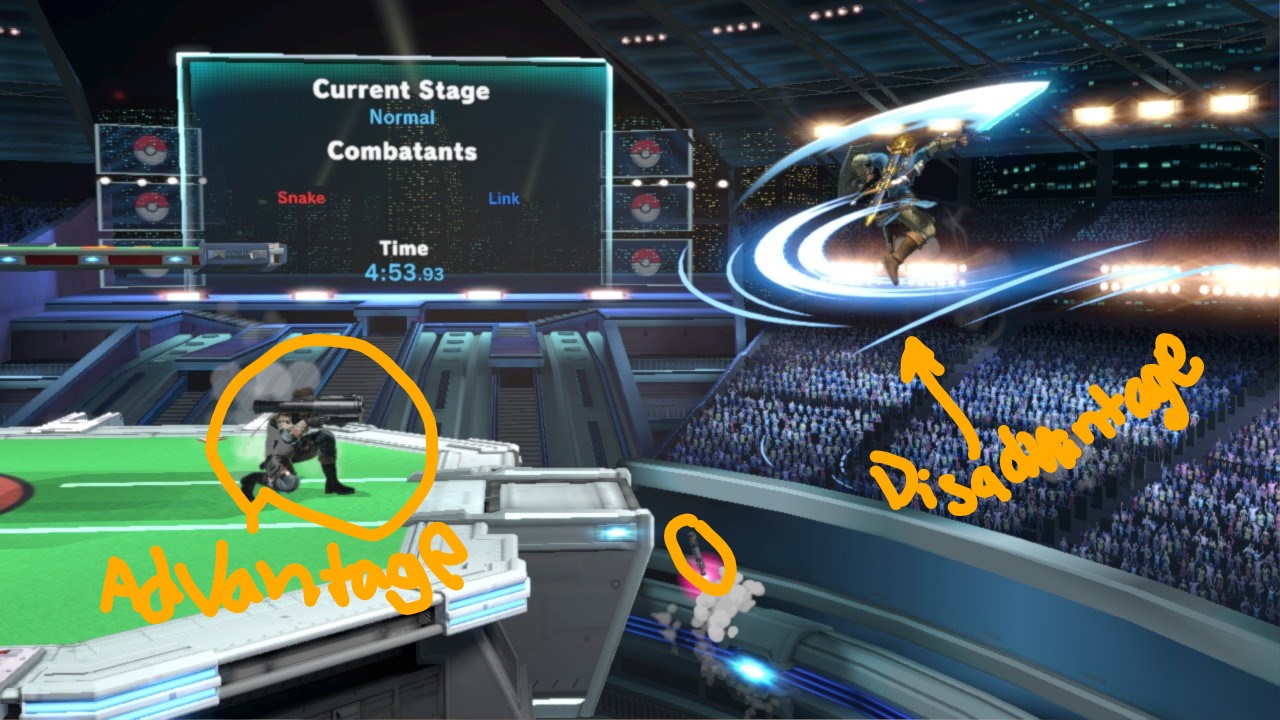
Being in advantage is what a player wants to be in most of a game. Advantage state is when a player is performing a combo on the opponent or it can be when a player has stage control. As long as a player is hitting or not getting hit, that player is in advantage. Disadvantage is when the opposite side of advantage state. If a player is getting combo’d or a player is getting hit offstage and trying to recover, that player is in disadvantage. In the example, Snake has already positioned himself with his launcher and trying to hit Link with the projectile. Snake is in advantage while link, trying to get back to stage, is in disadvantage.
Baiting
When you try to make your opponent react a certain way so you can punish them for it; this is called a bait. Let’s say a opponent is hanging on ledge for the 10th time, you kept hitting them with a move that will hit them even though they are hanging on the ledge. The 10th time they hang on that ledge you start to notice they stay there and you know they are going to roll from ledge. So, this time, instead of doing that same attack, you dash back to the position they roll to and punish.
Conditioning
When you create a pattern to make your opponent react a certain way is called conditioning. This fundamental can be hard to do, especially if you’re not keen to keeping track of your patterns. I’ve known this type of fundamental takes some time for people to develop but with hours of playtime, people tend to understand it more.
Reads
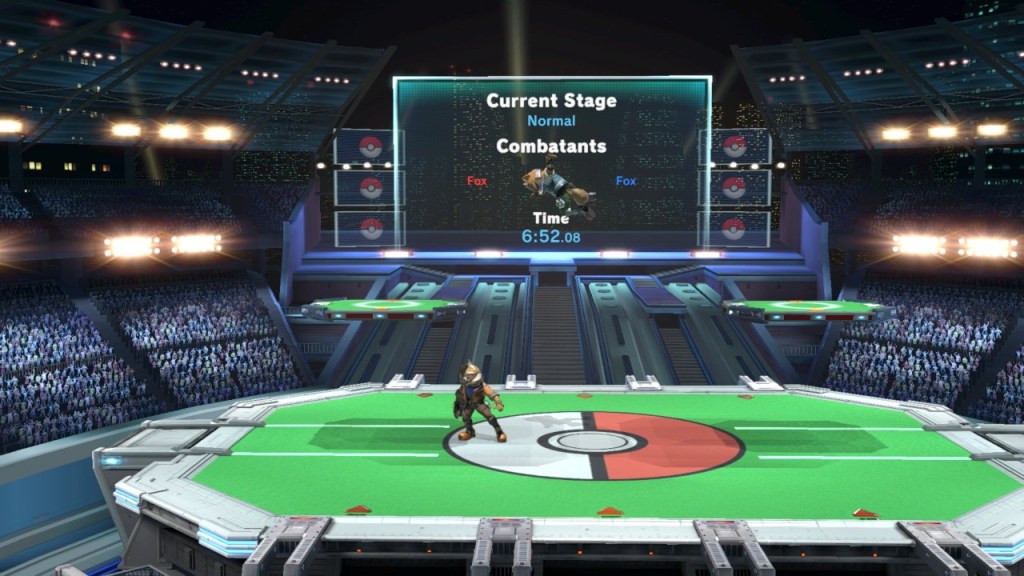
When an opponent is playing in a very linear way, and the player can notice their patterns, they can punish it with a hard read. Hard reads are usually done with smash attacks (charged a good amount before doing so). The picture above has a Fox jumping over another. If the Fox below knew his opponent was going to do this, he could punish with a charged upsmash.
This video has more terminology that is said around the FGC and other basics to take into account.
These are some terms to think about before playing, while playing, and even after. There is alot to cover when it comes to fighting game theory. These fundamentals should help a player understand the game better. Learning these will have a player taking stocks in no time.
 Doombase's Guide into the Fighting Game Community (FGC).